
As people age, maintaining independence in daily activities becomes increasingly important. Mobility aids play a crucial role in enhancing the quality of life for individuals with limited mobility, particularly within the home environment. As people age or face physical challenges due to injury or illness, everyday tasks that once seemed effortless can become daunting and even hazardous. Mobility aids, such as walkers, canes, stairlifts, and grab bars, are designed to provide the support and stability needed to navigate the home safely and independently. Age Co Mobility provide a a whole range of aids that make independent living possible for so many people and that feeling is invaluable.
The kitchen, a hub of creativity and nourishment, is a space where older adults often want to continue their culinary passions. However, physical limitations, decreased mobility, and sensory changes can make cooking more challenging and potentially hazardous. Fortunately, with the right kitchen aids and modifications, elderly cooks can continue to enjoy their culinary pursuits safely and independently. This article explores various tools and adaptations that can enhance kitchen safety and preserve the freedom to cook.
1. Ergonomic Kitchen Tools
Arthritis, weakened grip strength, and joint pain can make using traditional kitchen tools difficult for elderly individuals. Ergonomic kitchen tools, designed with comfort and ease of use in mind, can significantly alleviate these challenges. Items such as easy-grip utensils, lightweight pots and pans with large handles, and adaptive cutting boards make meal preparation more manageable.
For instance, utensils with thick, non-slip handles require less strength to hold, reducing strain on the hands. Additionally, knives with angled blades and rocking motion features allow for safer, more efficient cutting, even with limited hand mobility.
2. Adjustable Countertops and Workstations
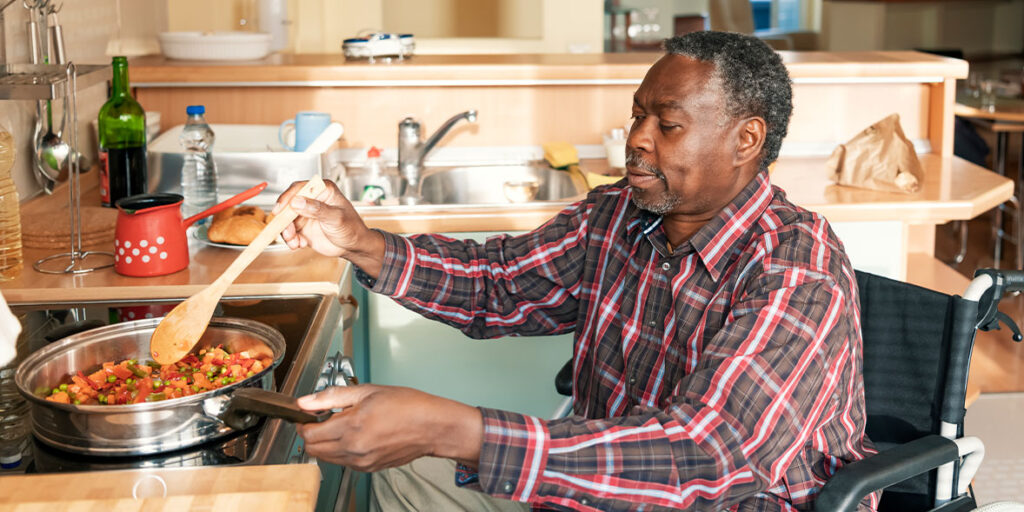
One of the most impactful kitchen modifications for elderly cooks is adjustable countertops and workstations. As mobility declines, bending down or reaching up to access countertops can become difficult. Adjustable-height countertops can be raised or lowered according to the user’s needs, allowing them to work comfortably while seated or standing.
Incorporating pull-out workstations, which can be adjusted to the user’s height, also offers a safe and convenient space to prepare food. These workstations can be particularly beneficial for individuals who use wheelchairs or have limited mobility.
3. Accessible Storage Solutions
Elderly individuals often struggle with reaching for items stored in high cabinets or bending down to access lower cupboards. To address this, consider installing pull-down shelves or lazy Susans in upper cabinets. These solutions bring items within easy reach, reducing the risk of falls or overexertion.
For lower cabinets, pull-out drawers or slide-out shelves can make it easier to access stored pots, pans, and other kitchen essentials. By minimizing the need for bending or stretching, these modifications help maintain a safe and accessible kitchen environment.
4. Anti-Fatigue Mats and Non-Slip Flooring
Standing for extended periods can be exhausting for elderly cooks, especially those with joint pain or circulation issues. Anti-fatigue mats, placed in areas where they spend the most time, such as in front of the stove or sink, provide cushioning and reduce discomfort. These mats can help prevent fatigue and minimize the risk of falls by providing a stable, cushioned surface.
In addition to anti-fatigue mats, non-slip flooring is crucial for preventing accidents in the kitchen. Flooring options with textured surfaces or non-slip coatings can significantly reduce the risk of slipping on spills or wet surfaces, ensuring a safer cooking environment.
5. Touch-Control Appliances and Automatic Shut-Off Features
As cognitive abilities may decline with age, it becomes important to incorporate appliances that are both user-friendly and safe. Touch-control appliances, which replace traditional knobs and buttons with easy-to-use touchpads, can be easier for elderly individuals to operate. These appliances often feature large, legible displays and simple interfaces, reducing the likelihood of confusion or error.
Another essential feature in kitchen appliances for elderly cooks is an automatic shut-off. This feature, available in many modern ovens, stoves, and small appliances, turns off the device after a set period of inactivity, preventing potential fire hazards caused by forgetting to turn off the stove or oven.
6. Bright Lighting and Visual Aids
Adequate lighting is vital for kitchen safety, particularly for elderly individuals with declining vision. Bright, well-placed lighting helps reduce shadows and enhances visibility, making it easier to read labels, measure ingredients, and see what is on the stovetop. Under-cabinet lighting, task lighting, and adjustable overhead lights can all contribute to a well-lit kitchen.
For those with severe vision impairment, visual aids such as large-print labels on spice jars, color-coded measuring cups, and tactile markers on frequently used appliances can further enhance kitchen usability.
7. Emergency Response Systems
Finally, for added safety and peace of mind, consider installing an emergency response system in the kitchen. Devices like wearable medical alert buttons or voice-activated emergency systems can quickly summon help in case of an accident, such as a fall or burn. These systems provide elderly cooks with the confidence to continue using their kitchen independently, knowing that help is readily available if needed.
Conclusion: Preserving Freedom and Independence
The kitchen is more than just a place to prepare food; it’s a space of creativity, tradition, and nourishment. For elderly individuals, the ability to continue cooking represents a significant aspect of their independence and quality of life. By incorporating ergonomic tools, accessible designs, and safety features, kitchens can be transformed into environments where elderly cooks can thrive. These modifications not only enhance safety but also preserve the freedom to enjoy the culinary arts well into the golden years.
Leave a Reply